Mar
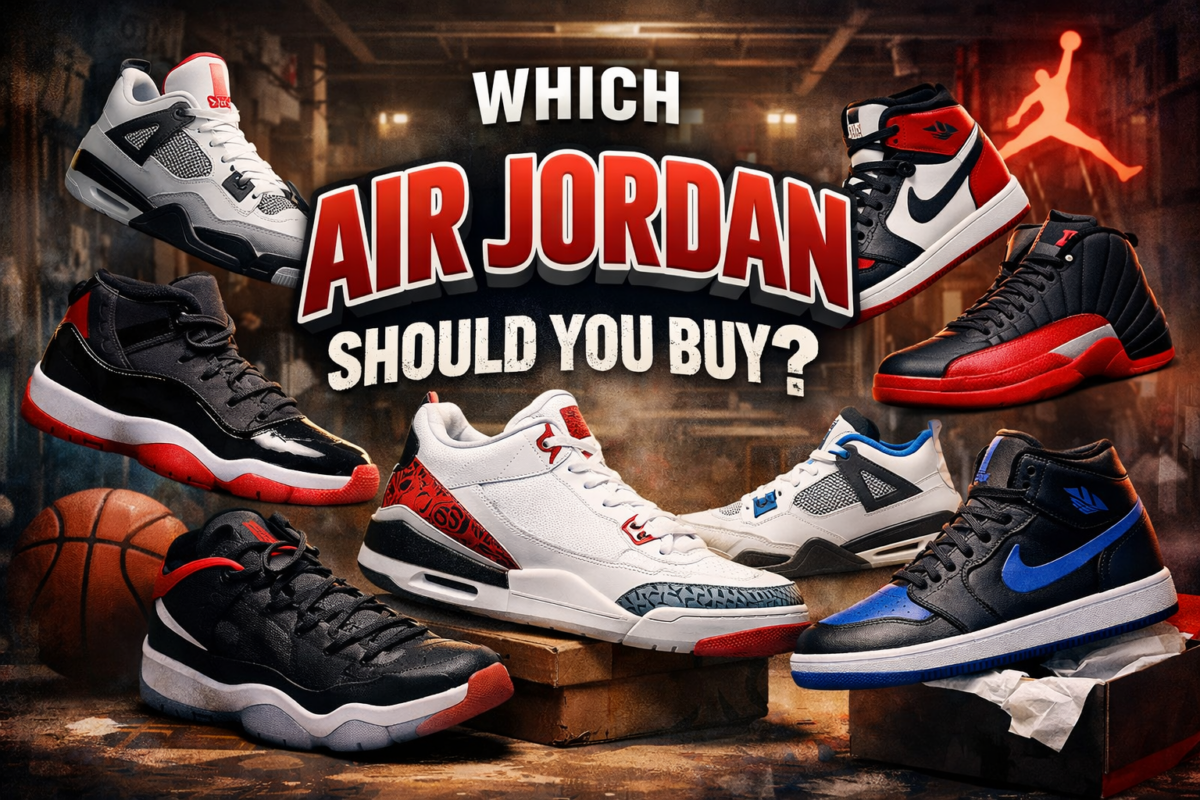
Which Air Jordan
Should You Buy?
Every major Jordan silhouette explained — what it is, who it’s for, and which colorways are worth owning right now. 1,500+ pairs in stock at Boogor, shipped to your door from Phoenix.
First — Why Does the Silhouette Matter?
Walk into a conversation about Air Jordans and you’ll hear people drop numbers like they’re code — “1s,” “4s,” “11s” — without ever explaining what those numbers mean or why one model costs $180 while another costs $800 on the resale market. The silhouette you choose determines everything: the fit, the sole technology, the culture it aligns with, and how it’ll wear over time.
At Boogor we carry Nike and Jordan exclusively, which means we know the lineup deeper than any general sneaker store. This guide is built to give you a straight answer: which Jordan model is right for what you need — and which specific pairs from our current stock are worth grabbing right now.
Start by knowing your use case. Jordan collectors, streetwear buyers, and basketball history fans all want something different from a pair:
OG colorways, limited releases, and pairs that hold resale value matter most. Go: Jordan 1, Jordan 4, Jordan 11. These three dominate the hype market for a reason.
You’ll wear them hard — with jeans, joggers, cargos. You want comfort, versatility, and a shoe that doesn’t scream “museum piece.” Go: Jordan 3, Jordan 5, Nike Dunk, Air Force 1.
One pair that turns heads and starts conversations. You don’t buy many but when you do, it’s the best. Go: Jordan 11, Jordan 4 (Off-White or Neon 95), Jordan 1 Chicago.
Quick Silhouette Comparison
Before we go deep on each model, here’s a fast reference across the key decision factors. “Hype” = resale demand and cultural cachet. “Daily Wear” = how comfortable it is as an everyday shoe. “Entry Price” = what you’ll pay at Boogor, not retail or resale.
| Model | Hype Level | Daily Wear | Best For | Entry Price |
|---|---|---|---|---|
| Air Jordan 1 | Very High | Medium | Collectors, OG fans | From $135 |
| Air Jordan 4 | Very High | High | Style + comfort balance | From $140 |
| Air Jordan 11 | Highest | Medium | Statement pairs | From $145 |
| Air Jordan 3 | Medium | Very High | Everyday comfort | From $135 |
| Air Jordan 5 | Medium | High | Unique detailing, daily wear | From $135 |
| Nike Dunk | High | High | Skate culture, streetwear | From $135 |
| Air Force 1 | Medium | Very High | Versatility, all-day wear | From $135 |
Every Silhouette, Broken Down
Below is our full breakdown of every major Jordan and Nike silhouette we carry — with real pairs from current stock linked directly so you can shop after you decide.
Air Jordan 1 — The Original
Designed in 1985 by Peter Moore, the Air Jordan 1 is where it all began. Nike literally paid Michael Jordan’s fine every time he wore them — $5,000 per game — because the red-and-black colorway violated NBA uniform rules. That story became the mythology that still drives demand 40 years later. Today the J1 is the most recognizable sneaker silhouette on earth: a clean high-top ankle collar, low-profile rubber cupsole, and no visible Air unit. Its simplicity is what makes it a canvas for endless colorways and collaborations.
The high-top is the standard silhouette. Jordan 1 Mids have the same shape but lower ankle collar. The Low gives you a more versatile, daily-friendly cut. All three carry the same DNA — pick the height based on your comfort preference and the outfits you wear most.
Air Jordan 4 — Function Meets Fire
The Air Jordan 4 debuted in 1989 and was MJ’s first shoe to truly fuse performance with fashion. Tinker Hatfield designed plastic “flight” wings on the eyestay that became one of the most iconic design details in sneaker history. The 4 has a chunkier, more three-dimensional silhouette than the 1 — it sits higher off the ground, has a visible Air unit in the heel, and its harder-wearing midsole makes it more forgiving for regular use. If you want a high-hype Jordan you can actually wear hard without babying it, the 4 is your move.
Collaborations have made the Jordan 4 one of the hottest silhouettes of the last decade — Off-White, Travis Scott, and SB colorways routinely resell for multiples of retail.
Air Jordan 11 — The Patent Leather King
Michael Jordan wore the 11 when he came back from baseball retirement in 1995 — and then again during the 1996 NBA Finals (Space Jam). No Jordan silhouette carries more emotional weight or generates more December hype. The 11’s defining feature is a full-length carbon fiber plate and a patent leather mudguard that gives it a formal, almost dress-shoe quality. This is a shoe you can wear with a suit and not feel underdressed. It’s also the silhouette with the single highest resale premiums on iconic colorways like Bred and Concord.
The Jordan 11 is less about daily rotation and more about impact — wear them when you want the room to notice. The Retro Low variant gives you the same DNA in a more wearable profile.
Air Jordan 3 — Where Jordan Almost Left Nike
Most people don’t know that Michael Jordan nearly signed with Adidas before the Jordan 3 came out in 1988. Tinker Hatfield saved the relationship by designing the 3 — and it introduced the visible Air unit in the heel that became the template for all future Air Max designs. The elephant print overlay, Jumpman logo (appearing for the first time), and low-profile tooling make the 3 one of the most comfortable Jordan silhouettes to actually walk in all day. Less bulky than the 4, more flexible than the 1.
Air Jordan 5 — The Fighter Jet
Tinker Hatfield drew inspiration from WWII fighter jets and shark mouths when designing the Air Jordan 5 — and it shows. The translucent sole with lace locks, mesh tongue, and reflective detailing make the 5 the most visually complex low-profile Jordan. It’s also one of the few Jordan silhouettes where the reflective 3M tongue lets you be seen at night. The Grape, Fire Red, and Aqua colorways are the three you need to know — iconic combinations that have been retroed multiple times because the demand never fades.
Nike Dunk — The People’s Shoe
The Dunk started as a basketball shoe in 1985 (same year as the Jordan 1) but found its cult following in skate culture in the early 2000s. When Supreme and StrangeLove did limited Dunk collabs, the resale market for Dunks was born. Today the Dunk Low is the most democratically priced high-hype silhouette — clean, low-profile, and with the largest color-block canvas of any Nike shoe. SB Dunks carry extra cult value from their skateboarding heritage and limited production. If you want variety without breaking the bank, Dunks are your playground.
Nike Air Force 1 — The Classic That Never Dies
Released in 1982 as the first basketball shoe to use Nike Air cushioning, the Air Force 1 became a hip-hop icon when Baltimore teenagers started buying them in the mid-80s — and it never left. The AF1 is the best-selling Nike shoe of all time, outselling every Jordan silhouette combined in most years. Its chunky, pillowy sole has an aesthetic that somehow works with every outfit from sweatpants to dress pants. The Off-White collaboration (The Ten, 2017) brought it back into the conversation with a new generation, but the AF1 never really needed help. White on white remains the standard, but the variety at Boogor lets you find something more personal.
Jordan Sizing — What You Need to Know
One of the most common post-purchase complaints in Jordan sneakers is the sizing. Different silhouettes have meaningfully different fits — what works in a Jordan 1 might not work in a Jordan 11. Here are the rules by silhouette:
Ready to Find Your Pair?
1,500+ authentic Nike and Jordan sneakers in stock — every silhouette in this guide, shipped direct from Phoenix, AZ.
Shop All Jordans & Nikes →
Frequently Asked Questions
Disclosure: All product links go directly to current inventory on Boogor.com. Prices, stock availability, and colorway names are subject to change. All Jordan and Nike sneakers sold at Boogor are brand new, authentic, and shipped in original manufacturer packaging. Resale value estimates are based on historical market trends and are not a guarantee of future value.